
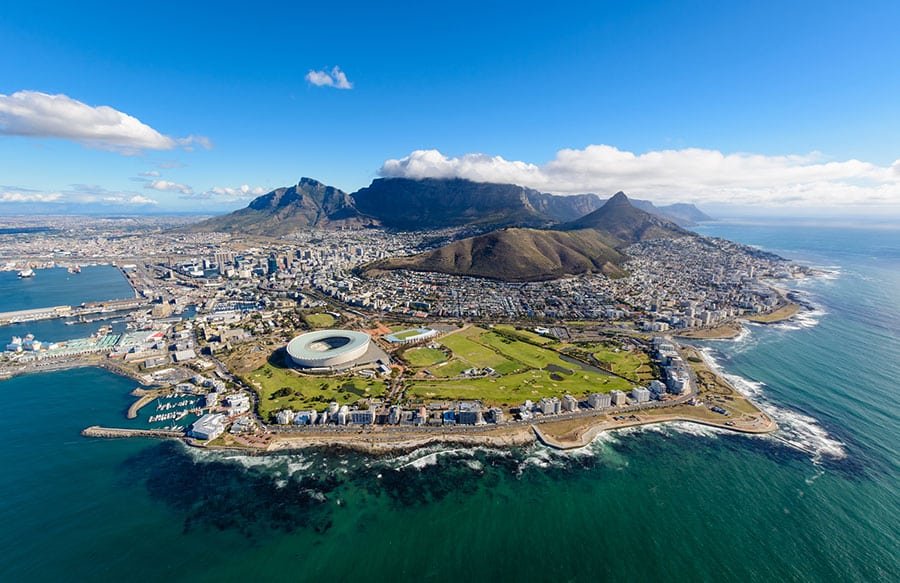
Cape Town is one of those cities where history is impossible to separate from the landscape. Table Mountain, Robben Island, the Castle of Good Hope, Bo-Kaap and the Cape Peninsula all tell parts of a story that stretches back thousands of years.
As a Cape Town-based guide with Itchy Feet Tours & Safaris, I believe understanding a little of that history makes a visit to the city far more meaningful. The places you see are not simply beautiful attractions; many are connected to the people, cultures, conflicts and changes that shaped modern South Africa.
Whether you are visiting for a few days or exploring the region on one of our Private Tours Cape Town, here is a brief history of Cape Town that every visitor should know.
Cape Town’s Story Began Long Before the City
Long before Cape Town became a European settlement, the Cape was home to indigenous communities, including the Khoekhoe and San peoples.
The area around Table Mountain and the Cape Peninsula provided access to fresh water, food and natural resources. The region also formed part of important seasonal migration and trading routes.
This is an important starting point when learning about Cape Town: European settlement did not mark the beginning of the city’s history. People had lived in and around the Cape for thousands of years before the arrival of European settlers.
The Arrival of the Portuguese and the Dutch
European ships began rounding the Cape in the late 15th century as explorers searched for a sea route between Europe and Asia.
Portuguese explorers, including Bartolomeu Dias in 1488 and Vasco da Gama in 1497, passed the Cape on their voyages.
However, it was the Dutch who established the first permanent European settlement at the Cape.
In 1652, Jan van Riebeeck arrived on behalf of the Dutch East India Company (VOC) and established a refreshment station at the Cape. Its purpose was to provide fresh food, water and supplies to ships travelling between Europe and Asia.
The settlement grew around what is now Cape Town’s city centre.
The Castle of Good Hope and the Early Settlement
One of Cape Town’s most important historical buildings is the Castle of Good Hope.
Construction of the existing stone castle began in 1666, replacing an earlier earthen and timber fort. It became an important centre of administration and defence for the Dutch settlement.
Today, the Castle is one of the best-preserved examples of Dutch colonial architecture in South Africa and provides visitors with a tangible connection to Cape Town’s early colonial history.
Slavery and the People Who Built Early Cape Town
One of the most important and often overlooked parts of Cape Town’s history is the history of slavery.
From the 17th century, the Dutch East India Company brought enslaved people to the Cape from places including East Africa, Madagascar, India, Sri Lanka and Southeast Asia.
Enslaved people played a major role in building the settlement, working in agriculture, domestic service, construction and other trades.
Their influence can still be seen in Cape Town’s culture, food, language, architecture and traditions.
The history of slavery is particularly important when visiting areas such as the Bo-Kaap, where the descendants of Cape Town’s early Muslim communities form an important part of the city’s cultural heritage.
Bo-Kaap and Cape Town’s Multicultural Heritage
The colourful houses and steep cobbled streets of the Bo-Kaap have become one of Cape Town’s most recognisable sights.
But the neighbourhood is much more than a collection of colourful buildings.
Historically known as the Malay Quarter, Bo-Kaap developed as a home for many of Cape Town’s Muslim residents, including descendants of enslaved people brought to the Cape.
The area reflects the multicultural character of Cape Town through its architecture, Islamic traditions, food and community life.
A private tour allows visitors to explore places such as Bo-Kaap at a more relaxed pace while learning about the people and stories behind the neighbourhood.
British Rule and the Growth of Cape Town
The British took control of the Cape Colony at the end of the 18th century, and British influence became increasingly important during the 19th century.
Cape Town developed into a major port and commercial centre, while the wider Cape Colony expanded.
The discovery of diamonds in the 1860s and gold in the 1880s transformed southern Africa economically and politically. Cape Town became an important gateway for people, goods and ideas moving through the region.
Many of the city’s Victorian buildings and neighbourhoods date from this period of rapid development.
Cape Town and the Apartheid Era
To understand modern Cape Town, visitors also need to understand apartheid.
The apartheid government came to power in 1948 and introduced a system of racial segregation that affected virtually every aspect of life in South Africa.
Cape Town was deeply affected.
Communities were forcibly removed from areas that were declared for particular racial groups. District Six is one of the most powerful examples.
Once a vibrant, multicultural neighbourhood close to the city centre, District Six was declared a white area under apartheid. Thousands of residents were forcibly removed from their homes during the 1960s and 1970s.
Today, the District Six Museum helps preserve the memories and stories of the people who lived there.
Robben Island and Nelson Mandela
Perhaps no place better represents South Africa’s struggle against apartheid than Robben Island.
Located just offshore from Cape Town, Robben Island was used as a prison for political prisoners during apartheid. Nelson Mandela spent 18 years imprisoned there.
Mandela and many other political prisoners endured difficult conditions while continuing their opposition to apartheid.
Robben Island later became a powerful symbol of South Africa’s journey towards democracy and reconciliation.
Today it is a UNESCO World Heritage Site and one of Cape Town’s most significant historical attractions.
Cape Town After 1994
South Africa’s first democratic elections were held in 1994, with Nelson Mandela becoming the country’s first democratically elected president.
Cape Town has continued to evolve since then, becoming one of Africa’s most popular international tourist destinations.
Today, visitors experience a city where centuries of history exist alongside modern restaurants, art galleries, wine estates, beaches and a thriving creative scene.
The history hasn’t disappeared. It remains part of the city’s identity.
How Cape Town’s History Connects to Its Landscape
One of the best things about visiting Cape Town is that history and scenery are often found in the same place.
On a Cape Peninsula tour, for example, you can travel from the city along the Atlantic Seaboard, through Camps Bay and Hout Bay, over Chapman’s Peak and towards Cape Point.
Along the way, the landscape tells its own story.
The Cape Peninsula was historically important for maritime navigation, while the meeting of the Atlantic and Indian Ocean waters around the Cape helped make the region strategically significant for European shipping.
Cape Town’s History Beyond the City
Cape Town is also the gateway to the Cape Winelands, where towns such as Stellenbosch and Franschhoek have their own complex histories dating back to the early colonial period.
The Cape Winelands combine beautiful landscapes, historic architecture, wine production and diverse cultural influences.
If you’re staying in Cape Town for several days, exploring the Winelands provides an opportunity to experience another important part of the region’s history.
Frequently Asked Questions About Cape Town’s History
When was Cape Town founded?
Cape Town’s permanent European settlement was established in 1652, when Jan van Riebeeck arrived at the Cape on behalf of the Dutch East India Company.
However, the history of the Cape stretches back thousands of years before European settlement, with indigenous communities living in the region long before 1652.
Who lived in Cape Town before the Europeans?
The Cape region was inhabited by indigenous communities, including Khoekhoe and San peoples, long before European settlement.
Why is Cape Town called the Mother City?
Cape Town is commonly known as the Mother City because it was the first permanent European settlement established in southern Africa by the Dutch East India Company in 1652.
Why is Robben Island important?
Robben Island is best known as the place where Nelson Mandela and other political prisoners were incarcerated during apartheid. It is now a UNESCO World Heritage Site and an important symbol of South Africa’s struggle for democracy.
What is District Six?
District Six was a diverse and vibrant community close to Cape Town’s city centre. During apartheid, it was declared a white area and thousands of residents were forcibly removed.
What is the Bo-Kaap famous for?
The Bo-Kaap is famous for its brightly coloured houses, cobbled streets, Islamic heritage and Cape Malay cultural influence. It is one of Cape Town’s most distinctive neighbourhoods.
What is the best way to learn about Cape Town’s history?
One of the best ways is to explore the city with a knowledgeable local guide who can explain the history while you experience the places where it happened.
For visitors who prefer flexibility and a more personal experience, private tours in Cape Town allow you to explore at your own pace and focus on the places that interest you most.
Experience Cape Town Beyond the Tourist Attractions
Cape Town is more than Table Mountain, beaches and beautiful scenery. Every neighbourhood, historic building and coastal road has a story behind it.
At Itchy Feet Tours & Safaris, our aim is to help visitors experience those stories while also enjoying the incredible scenery and wildlife that make the Cape so special.
Whether you’re interested in history, photography, nature, food or simply seeing the highlights without being rushed, a private experience gives you the flexibility to explore Cape Town your way.
If you’d like a private guided experience, feel free to contact us here.
Recent Comments