
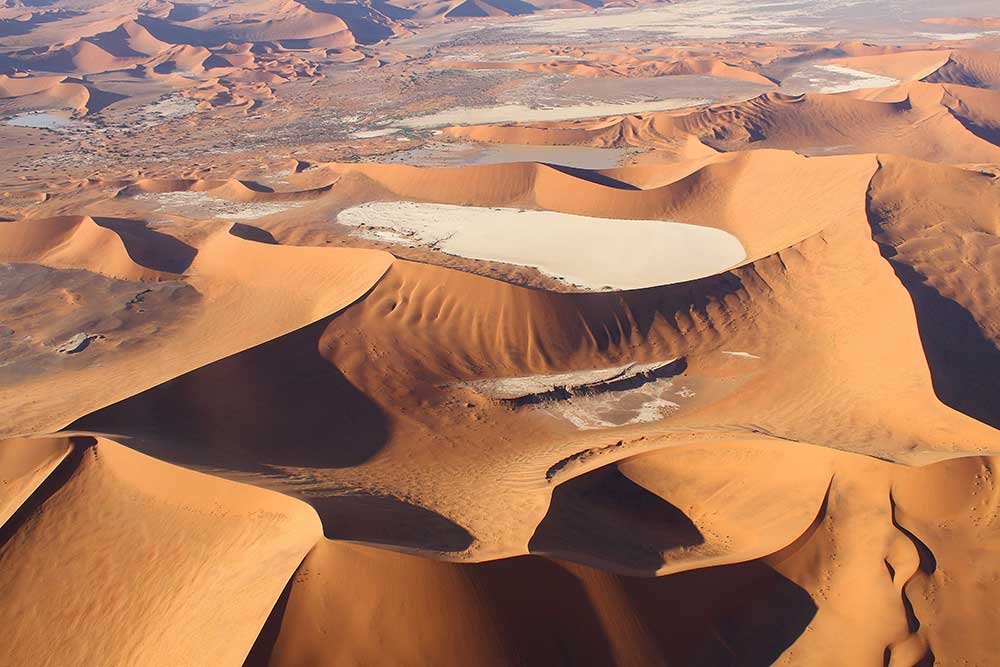
31 July – 10 August 2026
There are journeys that feel like holidays, and then there are journeys that become stories.
Our latest private Namibia Photography Safari, completed from 31 July to 10 August 2026, was very much the latter.
Over 10 days, we travelled from the red sands of the Southern Kalahari to the vast dunes of the Namib Desert, explored the Atlantic coast around Swakopmund, travelled through the ancient landscapes of Damaraland and spent time photographing wildlife in Etosha National Park before our final stop at Okonjima.
It was a journey of approximately 2,400 kilometres through some of Namibia’s most spectacular landscapes.
But it wasn’t simply about ticking destinations off a map.
It was about giving our guests time to experience Namibia, photograph its landscapes and wildlife, and enjoy the journey along the way.
Why Namibia Is So Special for Photography
Namibia is one of those rare destinations where almost every landscape seems to have been designed with photography in mind.
The country offers an extraordinary variety of photographic environments within a relatively compact itinerary:
- Red Kalahari sand dunes
- Vast Namib Desert landscapes
- The towering dunes of Sossusvlei
- The surreal white clay pan of Deadvlei
- Rugged mountains and canyons
- The Atlantic coastline
- Desert-adapted wildlife
- Etosha’s famous waterholes
- Open savannah and dramatic skies
And then there is the light.
Early mornings can transform the colour and texture of the desert. Late afternoon brings long shadows across the dunes. Wildlife becomes particularly interesting when the light is low, and the enormous open landscapes provide endless opportunities for minimalist compositions.
For photographers, Namibia is not just a destination.
It is a canvas.
Day 1 – Southern Kalahari
Our journey began in Windhoek, where we met in the morning before heading south towards the Southern Kalahari.
The drive itself is part of the Namibian experience.
The landscape gradually opens up as the city disappears behind you, eventually giving way to the distinctive red sands and vegetation of the Kalahari.
After settling into our first base we headed out on an afternoon game drive.
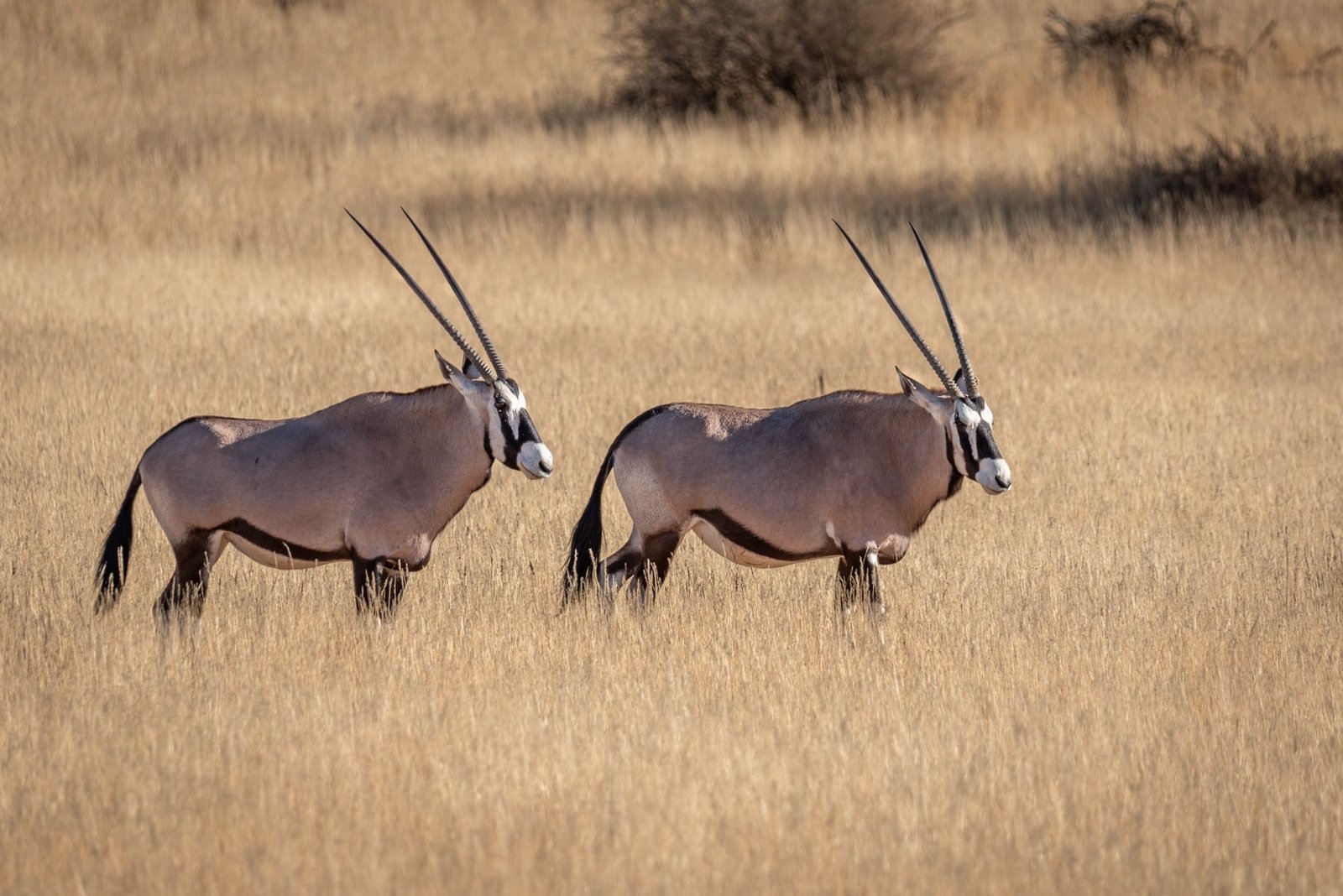
The Kalahari is home to a variety of desert-adapted wildlife, and our first afternoon gave us an immediate introduction to the relationship between Namibia’s wildlife and its extraordinary landscapes.
For photographers, the open terrain is particularly rewarding.
Animals can often be photographed not only as individual subjects but as part of the wider environment.
An oryx against the red dunes.
A giraffe rising above the vegetation.
Zebra moving across the open landscape.
These environmental portraits can tell a much bigger story than a tightly framed animal photograph.
Days 2-3 – The Namib Desert and Sossusvlei
From the Kalahari, we continued west towards the Namib Desert.
But before heading deeper into the desert, we had the opportunity to experience another side of Namibia.
Meeting the San
An early morning guided bushmen experience introduced us to the San people, their ancient traditions and their remarkable knowledge of surviving in one of the world’s harshest environments.
For us, this is an important part of travelling through Namibia.
A safari shouldn’t only be about landscapes and wildlife.
The people, cultures and stories of the destinations are equally important.
After breakfast, we continued towards our accommodation on the edge of the Namib Desert.
The following morning brought one of the major highlights of the journey.
Sossusvlei and Deadvlei
We made an early start into the desert to take advantage of the morning light.
As the first rays of sunlight reached the dunes, the landscape began changing almost by the minute.
The curves of the dunes became more pronounced.
Shadows stretched across the sand.
Colours shifted from deep orange to softer golden tones.
And suddenly, the enormous scale of the Namib Desert became apparent.
Then came Deadvlei.
The contrast here is extraordinary: a brilliant white clay pan surrounded by towering orange dunes, with the dark, skeletal forms of ancient camel-thorn trees standing against the landscape.
It is one of those places that looks almost unreal even when you are standing there.
And it is a photographer’s dream.
Photographing the Namib Desert
One of the lessons Namibia teaches photographers is the importance of light and simplicity.
You don’t always need a complicated composition.
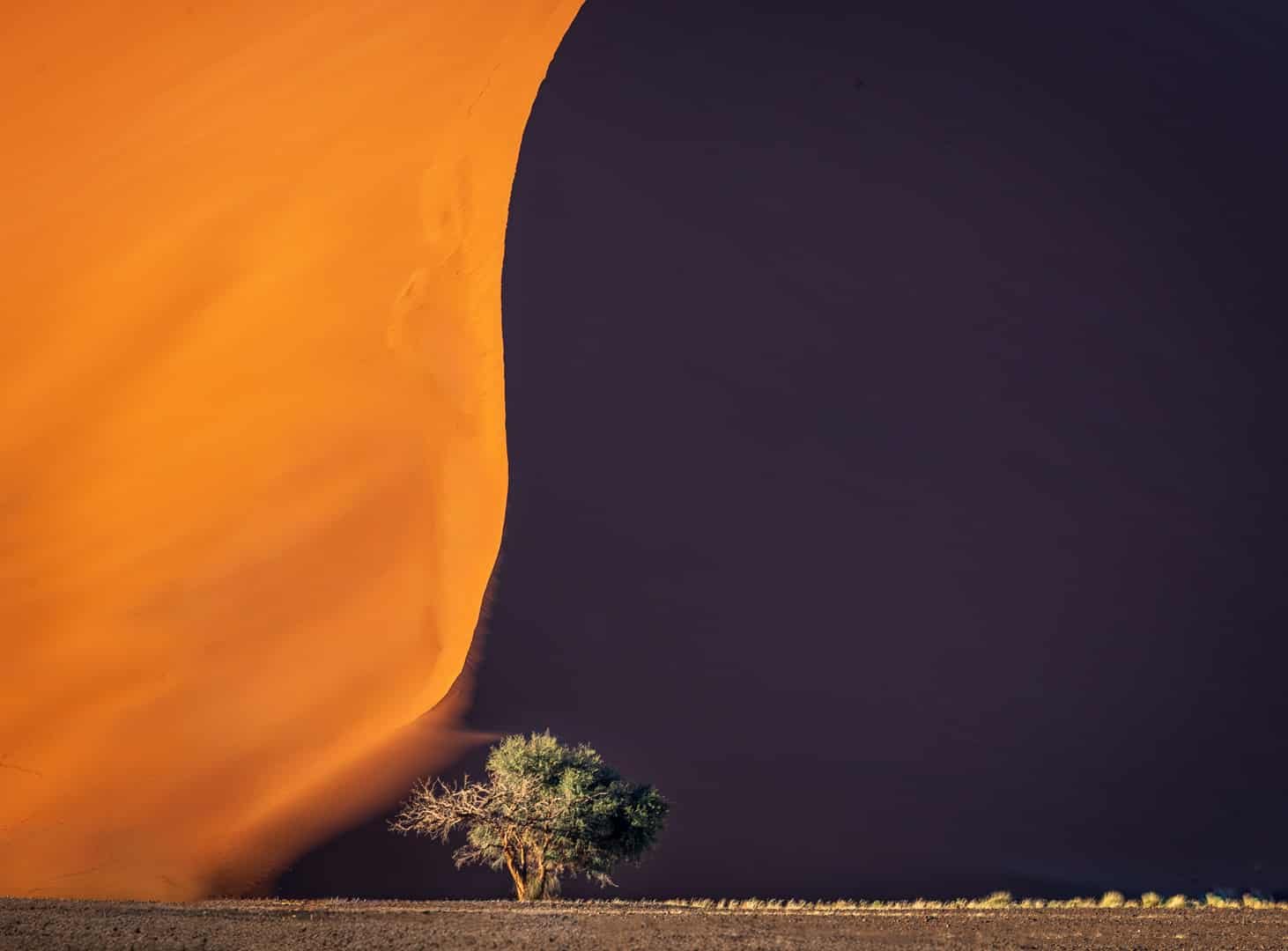
A dune ridge.
A shadow.
A solitary tree.
A tiny human figure against an enormous landscape.
A repeating pattern in the sand.
These simple elements can create incredibly powerful photographs.
A wide-angle lens is useful for capturing the scale of the desert, while a telephoto lens can compress layers of dunes and isolate patterns, shapes and shadows.
After spending time around Sossusvlei and Deadvlei, we returned to the lodge before heading out again later in the afternoon to explore Sesriem Canyon, another striking feature of the desert landscape.
Days 4-5 – Swakopmund, Walvis Bay & Sandwich Harbour
From the desert, we continued towards Namibia’s Atlantic coast.
The transition is remarkable.
One moment you are surrounded by enormous sand dunes.
The next, you are approaching the cold waters of the Atlantic.
Our route took us through Solitaire, across the Tropic of Capricorn and through the dramatic landscapes of the Gaub and Kuiseb passes before reaching Swakopmund.
Swakopmund itself provides a completely different atmosphere from the desert.
The German colonial architecture, markets and galleries give the town a distinctive character, while its location between the desert and Atlantic Ocean makes it an excellent base for exploring the surrounding coastline.
Sandwich Harbour
After a morning on the Atlantic waters near Walvis Bay and a beach lunch, the journey continued by 4×4 toward Sandwich Harbour.
The route provided opportunities to photograph flamingos around Walvis Bay, the arid Kuiseb delta and its wildlife, before reaching the spectacular meeting point of massive sand dunes and the Atlantic Ocean.
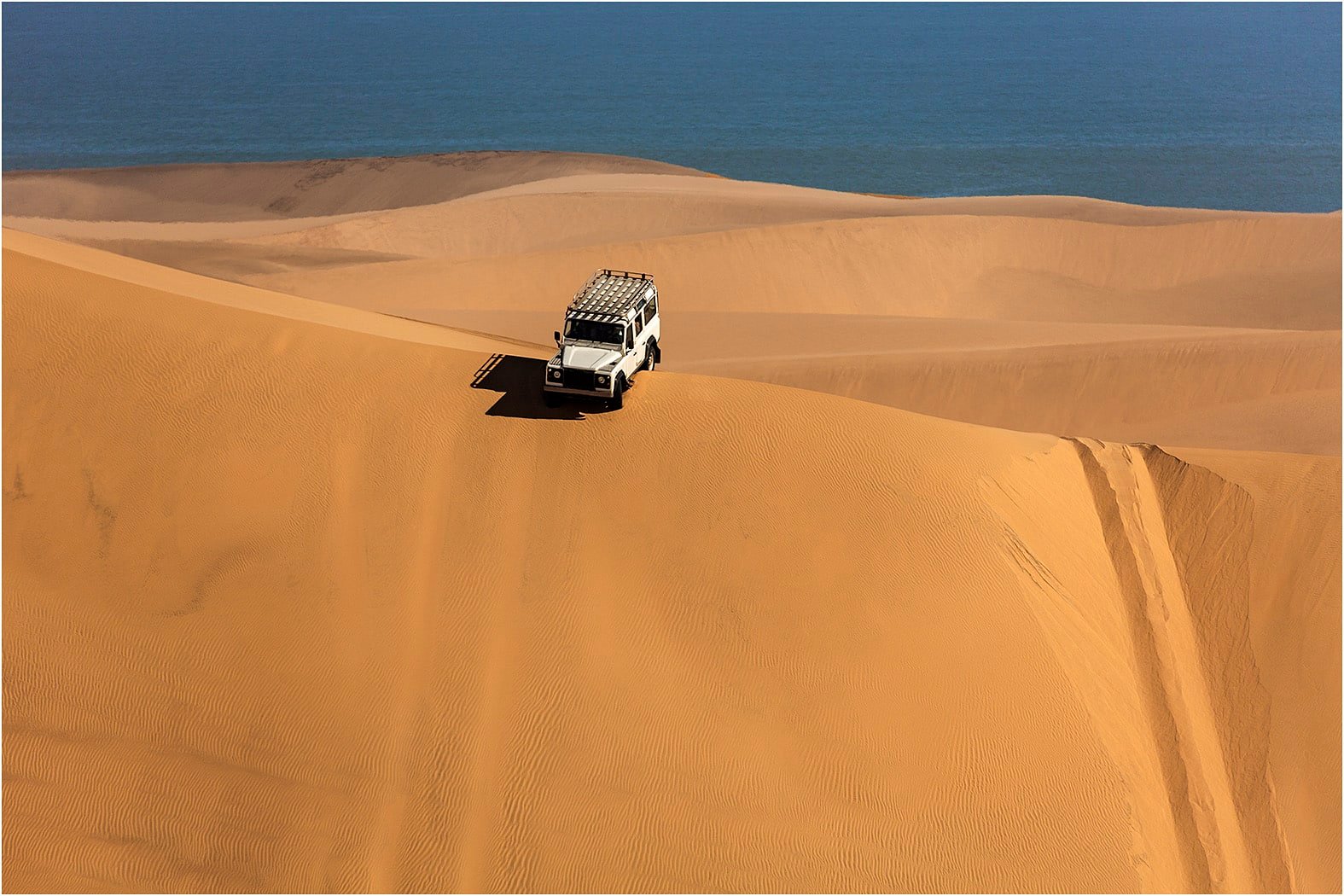
Sandwich Harbour is one of those places where Namibia’s contrasts become almost surreal.
Desert meets ocean.
High dunes rise beside the Atlantic, creating compositions that can look almost abstract from certain viewpoints.
For photographers, it is a reminder that Namibia is much more than its famous inland deserts.
Day 6 – Damaraland
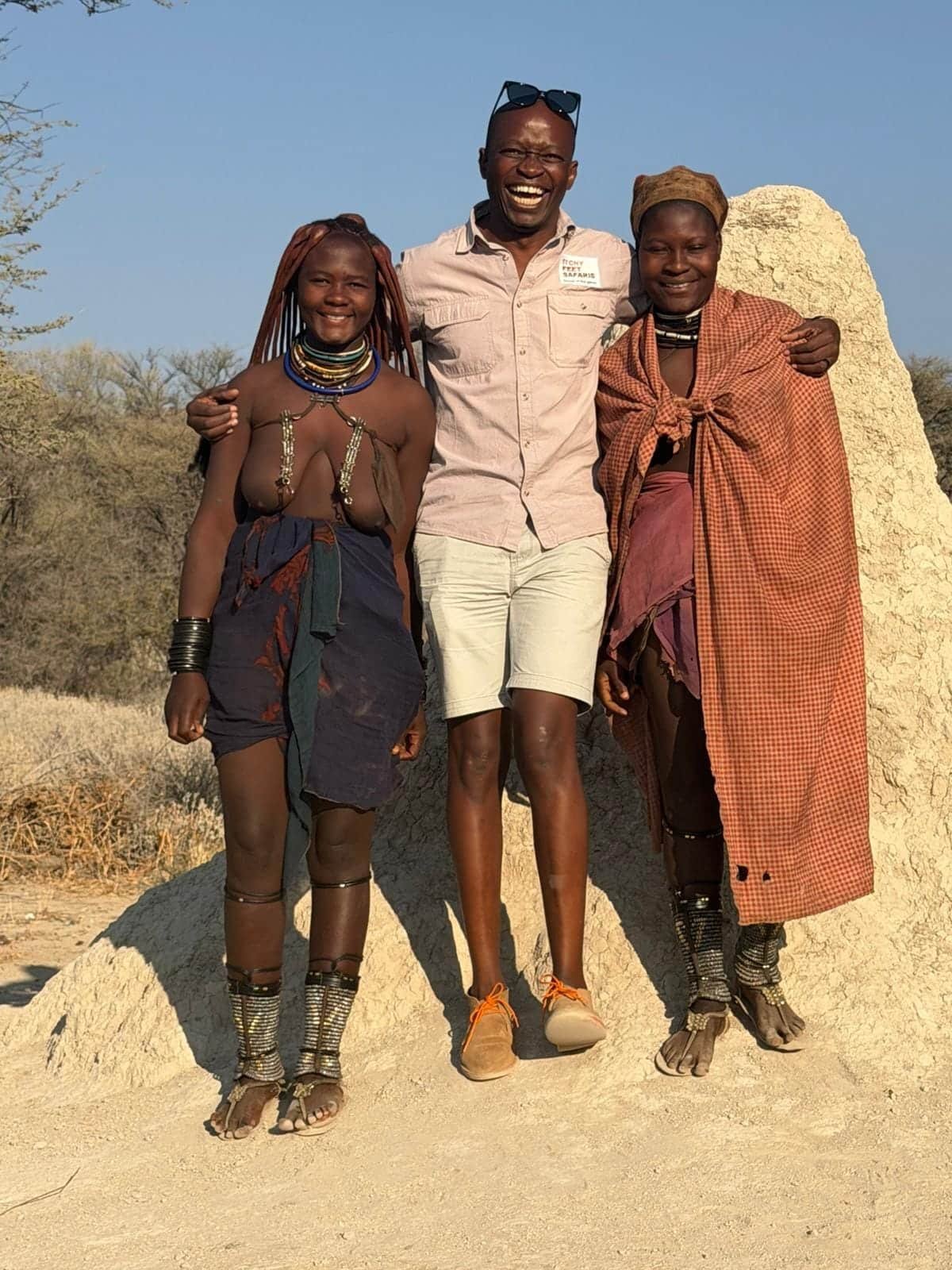
Leaving the coast, we travelled north towards Damaraland.
This section of the journey was about rugged landscapes, geology, culture and wildlife.
Along the way, we stopped to view one of the shipwrecks along the Skeleton Coast before continuing inland.
Damaraland is characterised by sparse vegetation, deeply eroded landscapes, mountain ranges and enormous open spaces.
The Brandberg, Namibia’s highest mountain, dominates parts of the region.
It is also an area associated with desert-adapted wildlife, including the famous desert elephants.
Another important part of this section of our journey was the opportunity to meet members of the Himba and Herero communities and experience some of the local culture.
These encounters are an important reminder that travel through Namibia is about much more than scenery.
Days 7-8 – Etosha National Park
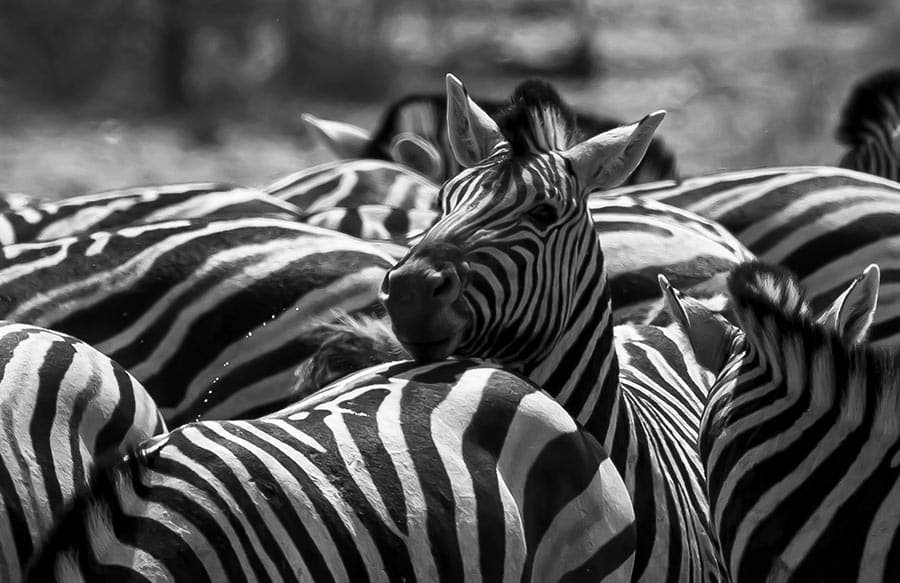
Then came the wildlife chapter of our journey.
We travelled towards Etosha National Park, one of Namibia’s most famous wildlife destinations.
Etosha is dominated by its enormous salt pan, surrounded by grasslands, mopane woodland and a network of waterholes.
For wildlife photographers, this creates a fascinating environment.
During the drier months, water becomes an increasingly important resource, and animals often gather around reliable water sources.
That creates opportunities for observing behaviour rather than simply looking for individual animals.
An elephant approaching a waterhole.
A giraffe carefully lowering its head to drink.
Zebra and antelope gathering together.
Predators moving through the landscape.
Birds coming and going.
Sometimes the most interesting photograph isn’t the animal itself.
It is the interaction between the animal, the environment and the other wildlife around it.
Our itinerary included afternoon and morning game drives in open safari vehicles, allowing us to concentrate on wildlife photography from a different perspective.
Day 9 – Okonjima Nature Reserve
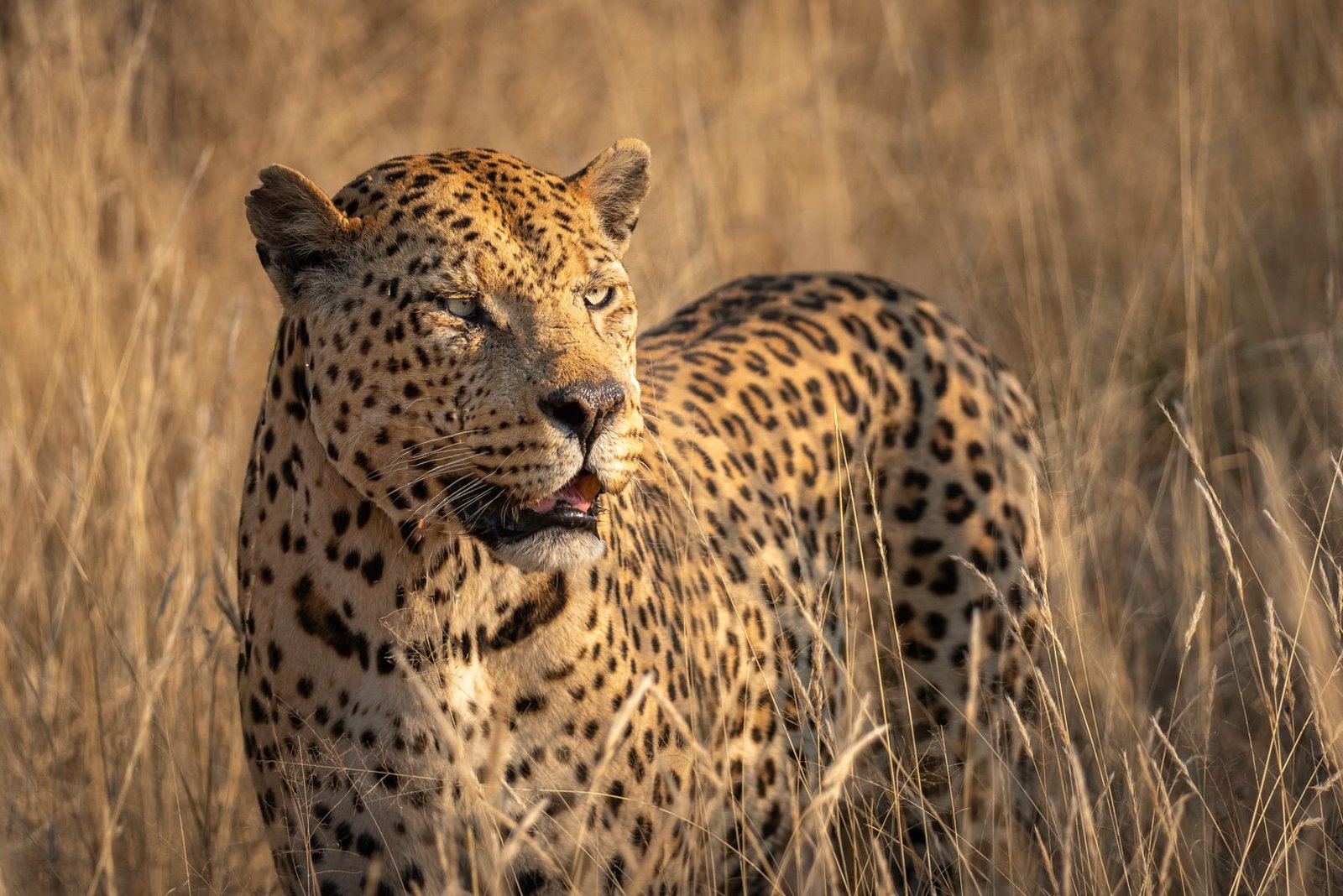
Private Tours Cape Town and South Africa safari
At Okonjima, we joined a leopard tracking experience, using specialised radio-tracking equipment to locate one of the reserve’s free-roaming leopards. While sightings are never guaranteed, the experience of tracking these elusive predators through the reserve made for an exciting and memorable end to our wildlife journey.
For a photography safari, it was a particularly rewarding experience – combining wildlife, conservation and the thrill of the search.
Day 10 – Back to Windhoek
Eventually, every journey has to come to an end.
Our final drive took us back towards Windhoek, with opportunities to stop along the way and explore some of the local souvenir markets before our farewell dinner.
And just like that, ten days had passed.
The route had taken us through deserts, mountains, coastline, wildlife areas and cultural experiences.
We had travelled approximately 2,400 kilometres.
But the distance travelled is only one way of measuring a journey.
The photographs, conversations, landscapes and memories are what stay with you.
What Makes a Private Namibia Photography Safari Different?
A conventional sightseeing itinerary and a photography safari are not necessarily the same thing.
Photography requires time.
You may want to wait for better light.
You may want to remain at a waterhole because wildlife activity is increasing.
You may want to photograph the same dune from several different perspectives.
Or you may simply want to stop because the landscape in front of you looks incredible.
That is one of the reasons we designed our Private Namibia Photography Tour.
Our aim is not simply to move from one attraction to another.
It is to create enough flexibility for the photography and the experience to develop naturally.
Our Namibia Photography Tour is suitable for both experienced photographers and enthusiasts who simply want to improve their skills while experiencing Namibia. The tour includes collaborative photographic guidance covering areas such as composition, settings and lighting.
You Don’t Have to Be a Professional Photographer
One misconception about photography safaris is that they are only suitable for serious photographers with expensive cameras.
They aren’t.
Our Namibia Photography Tour is designed for both professionals and enthusiasts.
If you have a professional camera system and want to refine your technique, we can help.
If you simply enjoy photography and want to return home with better images, you are equally welcome.
The important thing is that you enjoy the process.
Sometimes that means discussing composition and camera settings.
Sometimes it means finding the best position for the light.
And sometimes it simply means putting the camera down for a moment and enjoying where you are.
Why We Keep Coming Back to Namibia
Having recently completed another journey through Namibia, we were reminded once again of how much variety this country offers.
Within a single itinerary, you can experience:
The Kalahari
Red dunes, desert wildlife and cultural experiences.
The Namib Desert
Towering dunes, Deadvlei and some of the world’s most recognisable desert landscapes.
Swakopmund and the Atlantic Coast
German colonial architecture, coastal scenery and the extraordinary Sandwich Harbour.
Damaraland
Rugged mountains, desert landscapes, cultural encounters and desert-adapted wildlife.
Etosha
Waterholes, wildlife and some of Namibia’s most rewarding safari experiences.
Okonjima
Conservation, carnivore research and another perspective on Namibia’s wildlife.
That variety is what makes Namibia so compelling.
You don’t spend ten days photographing the same thing.
Every few days, the entire photographic environment changes.
Planning Your Own Namibia Photography Safari?
Our Namibia Close Up Photography Tour is a 10-day journey is a private tour, combining Namibia’s landscapes, wildlife and cultural experiences with collaborative photographic guidance.
The itinerary is designed to take advantage of favourable lighting and photographic opportunities while still allowing guests to experience Namibia beyond the camera.
If you’re interested in joining us, you can learn more about the itinerary, accommodation, inclusions and booking arrangements on our Namibia Photography Tour page.
Explore our Namibia Close Up Photography Tour
And if you have something specific in mind, get in touch with us.
We can discuss your photography interests, travel dates and preferred pace before planning your journey.
From Namibia With Itchy Feet
Our 31 July–10 August 2026 journey was another reminder of why we love travelling through Namibia with our guests.
From the red sands of the Kalahari to the enormous dunes of the Namib, from the Atlantic coast to the rugged landscapes of Damaraland and the wildlife of Etosha, Namibia constantly changes the way you see the world.
And that’s perhaps what makes it such a rewarding photography destination.
You arrive looking for photographs.
You leave with memories.
I’m Kembo from Itchy Feet Tours & Safaris – and remember, the best journeys begin with itchy feet.
Recent Comments