
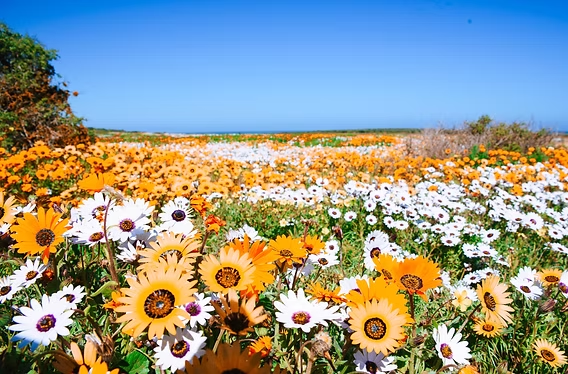
Every year, as winter begins to give way to spring, the landscapes north of Cape Town undergo one of South Africa’s most spectacular transformations. Fields that appear dry and unassuming for much of the year suddenly burst into colour, with carpets of white, yellow, orange, pink, purple and blue stretching across the West Coast.
This is the famous West Coast flower season, and it is one of my favourite times of year to explore the region with guests.
As a Cape Town-based guide, I’ve seen how quickly the landscape can change during these few weeks. The experience is not simply about seeing flowers. It is about driving through open coastal landscapes, stopping for photographs, enjoying the fresh spring air and watching the Cape’s winter landscape come alive.
If you are visiting Cape Town between August and September, the West Coast should definitely be on your list.
When is the West Coast flower season?
The main West Coast flower season runs from August to September, with the exact timing and intensity of the blooms depending heavily on the winter rainfall and weather conditions.
According to SANParks, the flower season at West Coast National Park reaches its peak during August and September. In recent seasons, the strongest displays have often occurred around mid-August to mid-September, although this can vary from year to year.
The flowers also need sunshine to show themselves at their best. On cloudy or overcast days, many of the flowers remain closed, while warm sunshine encourages them to open and creates the vivid carpets of colour that visitors come to see.
So, what is the best month to see the flowers?
If you have flexibility, mid-August to mid-September is generally a good window to target.
That said, there is no guaranteed “perfect” week. Flower season is controlled by nature, and rainfall, temperature, wind and sunshine all influence when different areas reach their peak.
This is one reason I always recommend checking conditions shortly before your visit rather than planning your entire trip around a specific date.
Where is the best place to see West Coast flowers?
There are several places where you can experience the spring wildflowers, but West Coast National Park is the standout destination for visitors staying in Cape Town.
The park lies near Langebaan and combines spectacular wildflower displays with the beautiful turquoise waters of the Langebaan Lagoon, coastal scenery and opportunities to see wildlife.
Within the park, the most famous flower-viewing area is Postberg.
Postberg: the highlight of flower season
Postberg Nature Reserve forms part of West Coast National Park and is one of the main reasons flower enthusiasts travel to the region.
The important thing to know is that Postberg is only open to the public during flower season, making an August or September visit particularly special.
Here, you can drive through vast open landscapes covered in seasonal flowers, with the possibility of seeing wildlife amongst the blooms.
The scenery can be extraordinary. One moment you may be looking across a seemingly endless field of white flowers; around the next bend, the landscape changes to yellow, orange or purple.
For photographers, this is particularly rewarding because the flowers provide a colourful foreground against the West Coast’s characteristic blue skies, granite outcrops and coastal landscapes.
Postberg is also home to a concentration of wildlife, including eland, red hartebeest, Cape grysbok and other species.
Seeberg and Mooimaak
Postberg gets much of the attention, but it isn’t the only part of West Coast National Park worth exploring.
SANParks identifies Seeberg and Mooimaak as important flower-viewing areas, alongside Postberg.
Seeberg is particularly worthwhile because the landscape combines seasonal flowers with elevated views across the surrounding coastal environment and Langebaan Lagoon.
The broader park is also worth exploring rather than simply rushing to Postberg, especially if you have a full day available.
This is one of the advantages of travelling with a private guide: you can take your time, stop when the light is good and spend longer at the places that interest you most.
What flowers can you expect to see?
The West Coast is home to an extraordinary variety of plant species, and the exact flowers you encounter will depend on the location and timing of your visit.
Some of the flowers associated with the August and September display include:
- Gousblom
- White rain daisies
- Bokbaai vygies
- Sporrie
- Magriet
- Soetuintjie
- Elandsvy
- Suurvy
SANParks records hundreds of plant species within West Coast National Park, with many flowering at different times of the year. Several of the species associated with the main flower season bloom between August and October.
You don’t need to know the names of every flower to appreciate the spectacle. In fact, one of the joys of the West Coast is simply stopping and taking in the sheer variety of colour.
What is the best time of day to see the flowers?
Sunshine is more important than the clock.
Wildflowers are at their most impressive when the sun is shining and the petals have opened.
For photography, I particularly enjoy the softer morning and late-afternoon light. Early morning can also provide a quieter experience before the day-trippers arrive.
During flower season, West Coast National Park can become extremely busy, particularly on sunny weekends. SANParks recommends visiting during the week where possible and arriving early to avoid long queues.
If you have a choice, I would choose a sunny weekday over a busy weekend.
Can you visit the West Coast flowers as a day trip from Cape Town?
Yes. West Coast National Park can comfortably be visited as a day trip from Cape Town, although I recommend allowing plenty of time rather than treating it as a quick excursion.
The experience is much better when you are not rushing from one viewpoint to another.
A typical day can include:
- Collection from your Cape Town hotel
- Scenic drive north along the West Coast
- Flower viewing in West Coast National Park
- Postberg, where accessible and open
- Seeberg and other scenic viewpoints
- Time around Langebaan Lagoon
- A relaxed lunch stop
- Return to Cape Town
For travellers who want flexibility, a Private Tours Cape Town experience is particularly useful during flower season. Weather and flower conditions can change quickly, while popular viewing areas can become crowded.
A private guide can adjust the route and timing according to the conditions on the day.
Why a private tour can make flower season better
The West Coast flower season is one of those experiences where timing makes a real difference.
A large group tour follows a fixed itinerary. A private tour gives you much more freedom.
If we find an area where the flowers are particularly spectacular, we can stay longer.
If the light isn’t right for photography, we can adjust the timing.
If one area is busy, we can explore another section of the park.
And if you are interested in photography, birding, wildlife or simply beautiful landscapes, the day can be shaped around your interests.
This is what I enjoy most about Private Tours Cape Town: the itinerary is not simply a list of places to tick off. It is an experience designed around the people travelling.
What should you bring for West Coast flower season?
Although spring can bring beautiful warm days to the Cape, the West Coast can also be windy and surprisingly cool.
I recommend bringing:
- Comfortable walking shoes
- A light jacket or windbreaker
- Sun protection
- A hat
- Sunglasses
- Water
- A camera or smartphone
- Binoculars if you enjoy birdwatching
- A picnic or snacks, depending on your plans
If you’re bringing a camera, a wide-angle lens is excellent for capturing large carpets of flowers and sweeping landscapes. A short telephoto or zoom lens can also be useful for isolating individual flowers or compressing layers of colour.
And don’t forget to bring a little patience. The best photographs are often found after getting out of the vehicle and taking a moment to look around.
Is West Coast National Park busy during flower season?
Yes.
Flower season has become increasingly popular, and sunny weekends can be particularly busy. SANParks specifically recommends visiting on weekdays where possible and arriving early to avoid long queues at the gates.
This is another reason I prefer taking guests during quieter periods when possible.
The flowers are spectacular, but the experience is even better when you can stop, take photographs and enjoy the landscape without feeling rushed.
How much does it cost to enter West Coast National Park?
Conservation fees vary according to nationality and the time of year.
For the current 2025/26 fee year, SANParks lists the flower-season adult conservation fee for international visitors at R306 per person, compared with R121 for South African citizens and residents and R192 for SADC nationals. These rates apply during August and September.
Because SANParks fees can change annually, I recommend checking the official SANParks rates before your visit.
Can you combine West Coast flowers with other Cape Town experiences?
Absolutely.
One of the advantages of basing yourself in Cape Town is the incredible variety of experiences within a relatively compact region.
You could combine a flower-focused day with a broader Cape Town itinerary, or spend another day exploring the Cape Peninsula, visiting Boulders Beach and Cape Point.
Another option is to dedicate another day to the Cape Winelands, with Stellenbosch and Franschhoek offering a completely different landscape and experience.
For travellers staying in Cape Town for several days, combining the West Coast flowers with the Cape Peninsula and Winelands creates a wonderful introduction to the diversity of the Western Cape.
Frequently Asked Questions About West Coast Flower Season
When is the West Coast flower season?
The main flower season is during August and September, with the strongest displays generally occurring around the middle of August to middle of September. Exact timing varies according to rainfall and weather conditions.
Where is the best place to see West Coast flowers?
West Coast National Park is one of the best and most accessible places to see the flowers from Cape Town. Within the park, Postberg is particularly famous and is only open to the public during flower season.
Can I visit West Coast National Park from Cape Town in one day?
Yes. A full-day trip from Cape Town is possible and allows enough time to explore the flower-viewing areas and surrounding landscapes without rushing.
Are the flowers visible every day?
The flowers are seasonal, but their appearance varies according to rainfall, temperature and sunshine. Flowers generally open more fully on warm, sunny days.
What is the best month for the West Coast flowers?
August and September are the key months. If you can choose your dates, mid-August to mid-September is generally a good period, although nature does not follow an exact calendar.
Is Postberg open all year?
No. Postberg is a special section of West Coast National Park that opens to the public during the annual flower season.
Is the West Coast flower season suitable for families?
Yes. Much of the flower viewing can be enjoyed from the vehicle, making it accessible for families and travellers who prefer not to undertake long hikes. The park also offers picnic and viewing areas.
Is West Coast flower season good for photography?
Absolutely. The combination of colourful flowers, dramatic coastal scenery, wildlife and changing spring light makes the region particularly rewarding for photographers.
Final Thoughts: Is West Coast flower season worth visiting?
Without a doubt.
The West Coast flower season is short-lived, unpredictable and completely dependent on nature. That is part of what makes it special.
For a few weeks each year, the landscapes north of Cape Town transform into something that feels almost unreal. Fields of wildflowers stretch towards the horizon, wildlife moves through the blooms and the normally dry West Coast landscape takes on an entirely different character.
If you are visiting Cape Town during August or September, make time for it.
And if you’d like to experience the flowers without worrying about driving, parking, timing or planning the route, a private guided day trip gives you the flexibility to enjoy the region at your own pace.
If you’d like a private guided experience, feel free to contact us here.
Recent Comments